Skill
Reconcile Thinking
Reads thought-partnership captures from an inbox and folds each one into your source-of-truth files — classified, versioned, never silently overwritten.
I keep my durable thinking — settled positions, project context, current state, an idea backlog — in a handful of markdown files. A separate capture step watches my conversations and, when something settles, drops a structured summary into an inbox. This skill is the back half of that pipeline: it reads the inbox and folds each item into the right file.
The thing it protects against is drift. A trustworthy source-of-truth file is only worth having if it says what I actually decided. Two failure modes erode that. One is silent overwrite — a fresh capture quietly replaces a settled position and the file now claims something I never concluded. The other is bloat — half-formed thoughts get filed as settled and dilute the signal. This skill makes the first structurally impossible and pushes back on the second.
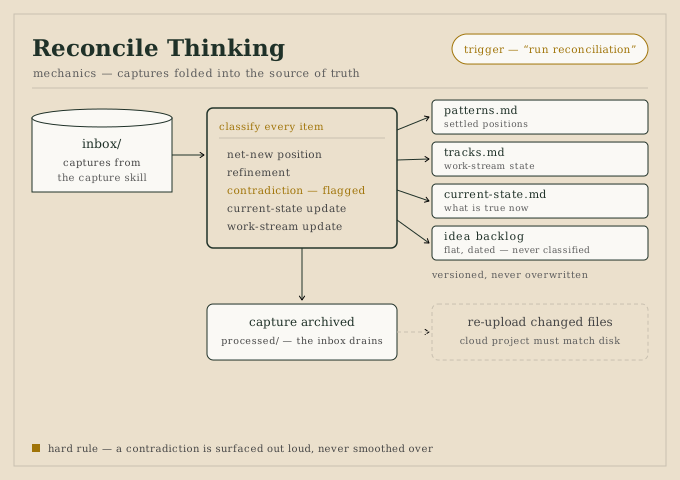
How it works
It runs a fixed procedure over the inbox and stops only where judgment is genuinely needed.
- Classify before writing. Each captured item gets a label. Settled positions are net-new, refinement, contradiction, or fuzzy. Current-state items are add, replace, or remove. Project-context items are substantive (record it) or passing (surface it, don’t write it).
- Stop on contradictions. A capture that conflicts with an existing position halts the run. It quotes both sides and asks you to replace, keep, merge as nuance, or something else. Nothing is written until you answer.
- Stop on fuzzy. Anything that reads like a position but half-formed also halts — add anyway, skip, or send back. Net-new, refinements, and current-state updates proceed silently.
- Snapshot before every write. Each file that changes is copied aside with a 24-hour timestamp first, so every edit is reversible and same-day reruns never collide.
- Append the backlog flat. Idea-backlog lines are the deliberate exception: collected verbatim across the batch and appended, with no classification, no contradiction check, no dedup, and no versioning.
The re-sync reminder
The skill edits the filesystem only. The copy you actually consume — a Claude.ai Project, say — is separate, and it drifts from the files until you upload. So the last thing the run does is print, for every changed file, the literal steps to re-sync it. If nothing changed, it says so and skips the reminder. Then it stops; it does not propose follow-on work.
One asymmetry worth keeping
Everything in the moat is judged, classified, and versioned. The backlog is a flat append and nothing else. That split is the point — don’t collapse it. Keep the capture step a separate skill, too: this one only reconciles.